Please dim the brightness and silence your device for the duration of the performance. Video/audio recording of this production is prohibited.
December 5-14, 2025
Opera in Two Acts, sung in English. Music by Engelbert Humperdinck.
- Dr. Lori Lind | Director / Production Manager / Artistic Director
- Dr. Lisa Bloy | Musical Director / Conductor / Associate Artistic Director
The Cast
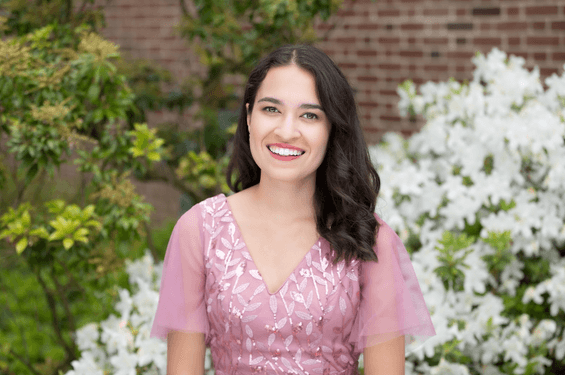
- Amanda Densmoor | Gretel
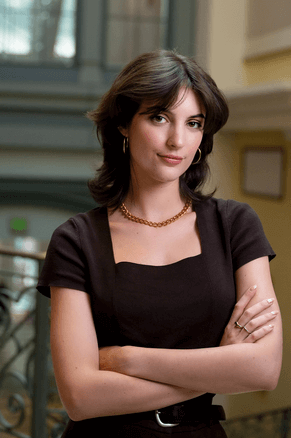
- Natalie Turner | Hansel
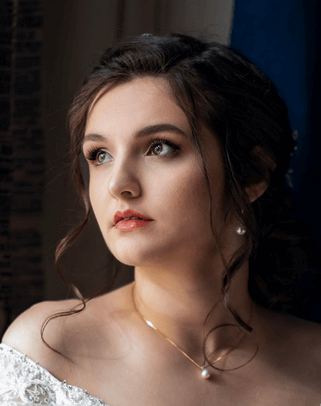
- Maggie Ramsey | Witch
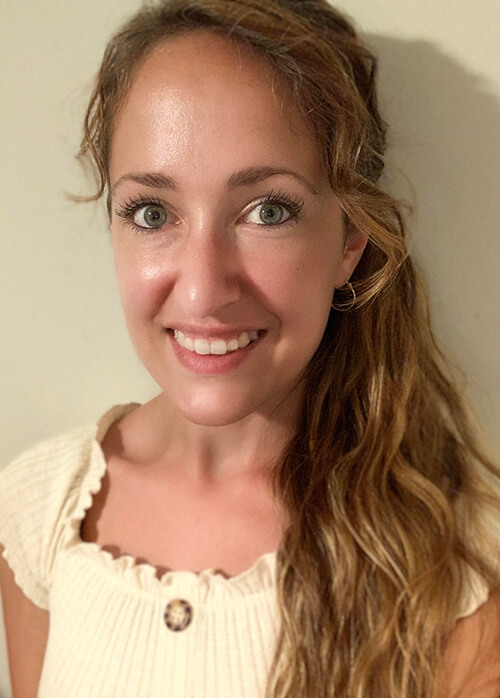
- Alicia Woodberry | Getrude (Mother)
- JP Gorski | Peter (Father)
- Antony Zwerdling | Peter (Father) / Witch Cover
- Gwen Baier | Sandman / Dew Fairy / Gretel Cover
- Ellie Pope | Sandman / Dew Fairy / Gretel cover
- Melissa Dyette | Angel / Bewitched Child
- Zoë Schall | Angel / Bewitched Child
Production Staff
- Gene Allen | Executive Producer
- Lauren Sanfiel | Executive Producer
- Wade Smith | Executive Producer
- Rick Knight | Associate Producer
- Donnette Rimmer | Assistant Producer
- Eva Salmeron | Assistant Producer / FOH Assistant
- Andrew Kraus | Assistant Artistic Director
- Laura Sage | Graphic Designer / Webmaster












Crew
- Susan Gardiner | Wardrobe
- Melissa Chavez | Educational Materials
- Madihah (Madi) Zubair | Front of House Manager
- Melissa Dyette | Education Coordinator
Sponsors





Synopsis
Hansel and Gretel: A Fairy Tale with Mommy (and Daddy) issues
Hansel and Gretel is based on late Medieval German folklore that the Grimm brothers, Jacob and Wilhelm, recorded in their famous collection of fairy tales. The two academics also posteritized the much beloved Snow White and the Seven Dwarves, Cinderella, Rapunzel, Little Red Riding Hood, Sleeping Beauty, and Rumpelstiltskin. The story of Hansel and Gretel is well-known the world over: two siblings, a boy and a girl, lost in the forest, encounter a candy house inhabited by an evil witch and generally end up outwitting her at her own game. There are versions with pebble trails, or with breadcrumb trails that get eaten by birds. There are versions where Hansel and Gretel’s mother is actually an uncaring, or even evil, stepmother. Often the Witch is a subtle (or not so subtle) synonym for the Mother/Stepmother. In one iteration, the stepmother dies at home mysteriously at the same time that the witch is consumed in the oven. Their father is a woodcutter, or sometimes a huntsman, and often portrayed as an absentee father who is a jovial and hapless drunkard. He allows his wife to “rule the roost” and his children to come to no good because of it. In modern versions, Hansel and Gretel are not so seemingly helpless, and are played by teens or adults. They are action heroes (Hansel and Gretel: Witch Hunters), or find themselves in scenes of mysticism and horror (the recent Gretel and Hansel redux). On the flip side, they are animated buffoons who are easily duped and lured in by the promise of gorging themselves silly, a là Loony Tunes.
Perhaps it will come as no surprise that these stories (and many more) stem from “morality plays” sponsored by the Catholic church in the early medieval period. During that time, most of the population was illiterate and relied on the church for learning. For instance, the tradition of stained glass windows that illustrate stories from the Bible being installed in churches comes from this period. The separation of church and state did not appear until the Enlightenment, some seven centuries later. A large part of the church’s mission at that time was the overseeing of societal order (read: money for their coffers and the preservation of their authority) and patriarchal structures fit very neatly into this narrative. The father, however otherwise distractible, is a loving and protective presence. His wife (or second wife after the children’s mother has died) insists that their father abandon them to fend for themselves in the woods, because otherwise they will all starve. The father reluctantly does what she advises, only to live in inconsolable remorse and longing for his lost children from that day forward. The moral of this part of the story can hardly be interpreted in any other way than as a warning to men. They are not to accede to women’s wayward wishes or relinquish any part of their moral authority and superior wisdom in the home. If they do, they will pay dearly for it.
The children and the witch bring in another moral lesson. It’s one we will easily recognize in our modern era: don’t talk to strangers. Don’t go with the man in the van who promises you candy, kids! Just say no (to drugs)! (Speaking of drugs, we had a lively discussion among the cast and crew as to whether the Brothers Grimm were opium users, the smoking of which was rampant among intellectuals in the early 19th century. Some of their stuff is pretty far out there… but I digress.) The other obvious lesson is that of the inevitability of good triumphing over evil, despite overwhelming odds, like the Biblical David (the children) slaying Goliath (the powerful witch) Though the children are lured in by temptation, in the end they realize they are in a trap and overcome and resist the Evil One (the devil or Satan) by keeping their wits about them and using the forces of light and wisdom.
Engelbert’s Spiel
In Humperdinck’s opera, drawn from folk tunes mined by his sister Adelheid, the mother is the children’s biological mother, and their father is a broommaker. This ties in neatly with the witch’s use of a broom to hex the children to get them to do her will. One has to ask: did the children’s father knowingly sell the Gingerbread Witch her ride? Is this how he knows she resides there in a weird confectionary cottage in Ilsenstein and will bring the children to harm, while the mother does not? We contrived a backstory with the cast where they walk the two miles to church with other families each Sunday morning and pass Ilsenstein woods on the way, which is why the mother is naive about the dangers that lie there when that same path is abandoned. Only a traveling broom seller would understand the real possibility of their children being abducted and eaten. THE HORROR! Why he has not mentioned this to her, or *gasp* the children—or even the neighbors or WHOEVER is in his little neck of the woods before, we will never know, but it would certainly squelch our storyline if he did. (So much of opera would have no story, or at the most, one act, if people had one simple conversation or asked one simple question. But again, I digress.)
I’m not going to keep flogging you with my tiresome scholarly research. I won’t try to talk you into some “first folio”, esoteric and comprehensive version of The Real Hansel and Gretel™, because I don’t think there can be just one that rings true for everyone. The beauty of these folkloric frolics is that they belong to each individual. Whether you love the symbolism, the history, the cultural commonality, the music or the characters, the story of Hansel and Gretel is pure FUN! An operatic setting enhances it tenfold. I know you will leave richer for having experienced it. And that is why we are committed to presenting these timeless works in a jewel box setting for everyone to enjoy.
Our singers come to us from all over the world, and we also hire classical actors for our Big Shakespeare Show™ each summer. We’ll be presenting Shakespeare + Verdi’s MacBeth in July of 2024, and we hope you’ll come back to see that highly anticipated hybrid production. This season we’ll also be presenting a concert in the memory of one of our beloved sponsors who passed away suddenly in October of this year. He provided housing for four of our singers for Much Ado About Nothing/Béatrice et Bénédict in the summer of 2023, and the mutual love affair between them was apparent to all. He was looking forward to hosting more singers and continually asked me “when are the kids coming back?” His name was Jim Galloway, and he was dearly loved and is sorely missed by us all. We’ll hold the Concert for Jim in April/May of 2024 in his honor. It will raise funds to pay our out-of-town singers and reimburse their travel expenses. A portion of these funds will be set aside to honor a singer who is either from, resides in, or studies in Texas, where Jim’s beloved Alma Mater is located.
About SOT
Founded in 2015, Shakespeare Opera Theatre is a professional 501(c)(3) non-profit performing arts company specializing in classical theatre with classical music. We’ve been described as “classical mash-up,” and we think that fits us superbly! We are proud to perform at historic and beautiful Grace Episcopal Church in The Plains, Virginia, and NEW this season, at St. Thomas’ Episcopal Church in McLean, VA. Join us again for our future productions!
Our Mission
This is not a project one is asked to take on as a performing artist anywhere else in the world, as far as I am aware. The level of excitement from performers and audiences has grown exponentially with each production. It was most definitely not a raging success right out of the gate. You never know as a founder of a company if your ideas really are just plain hare-brained. Nevertheless, over time, some pretty fabulous artists showed up to bring it to life, and then an audience for what we do started to build. Who knew people like you would actually pay to see these unconventional presentations of the classics of Western civilization? I like to think that I did. But truly, I did not know what would happen. I think it’s a testament to my sheer stubbornness, and also to the people who supported me along the way. Indubitably, my first reaction is to thank my mother, who has always supported me no matter how crazy my ideas. Secondly, the people of Grace church and Weston Mathews, the rector there, for taking us on as a resident company back in 2018, and where we still perform, after wandering around in the wilderness for a few years. Then there is our current main rehearsal and performance venue, St. Thomas church, whose people and the rector, Fran Gardner-Smith, not only welcomed me as their organist and choir director, but enthusiastically opened their space and gave unmitigated and immediate support to Shakespeare Opera Theatre. My heartfelt thanks cannot be overstated: to our performers, our staff, our volunteers, our donors and supporters, and most especially to YOU, our devoted audience, without whom we would have no reason to do any of it.
Merci beaucoup, Grazie mille & Thank You!
Dr. Lori Lind — Managing Director
Donors
Shakespeare Opera Theatre would like to thank our donors for their generosity in supporting our season
Queen / King Donors ($1,001 +)
Eugene Allen
Grace the Plains Episcopal Church
Jan & Chuck Grimes
Katsas Family Trust
Walter Lazear & Audrey Adair
Tricia & Skeets Meyer
Cleta & Ray Raymond
Fran Gardner Smith & David Smith
Patricia & David Smith
Berta & Wade Smith
St. Thomas Episcopal Church
Countess / Count Donors ($501-$1,000)
Kenneth Garrett
Baroness / Baron Donors ($250-500)
Karen & John Knox
Debby McCaffree
Lynne Montgomery
Lee Swallows
Isabella Umberger
Supporters & Donors in Kind
Rishabh Bajekal
Will Ferris
Susan Gardiner
Carol & Duane Goddard
Jennifer Lee
Justin Meyer
Mollie Regan
Louise Rosenburg
The Vestry of St. Thomas
The Choir of St. Thomas
Joshua Waits
Phyllis & Stephen Wickman
Thank you for your considered support of Shakespeare Opera Theatre
Support Us
Your generosity keeps the classical performing arts alive. Thank you for supporting our performances!
Get Involved
It takes many helping hands to put on our productions. From Box Office to Backstage Crew, we could not survive without the generous gift of time from our volunteers.
Email Us
- Volunteer & Mailing List: info@shakespeareoperatheatre.com
- Auditions: auditions@shakespeareoperatheatre.com
Follow Us
Our social media pages are full of news, photos, trivia and updates on productions and events - a great way to stay connected to all of the great things happening at Shakespeare Opera Theatre.